



WOMEN DIRECTORS NEED TO SUCCEED FOR MUSEUMS TO SUCCEED
Stephen Reily, Founding Director, Remuseum
March 24, 2026
There are at least 20 openings for directors of major American art museums now (the MCA Chicago just got added to that list with Madeleine Grynsztejn’s announced retirement last week – another big pair of shoes to fill).
While openings occur for different reasons – some result from retirements and some from directors moving to other museums – a meaningful number fall into the category of “it looks like something didn’t work out,” and it’s hard to avoid the feeling that the directors for whom things don’t work out, more often than not, are women. At the same time, male directors whose tenures becomes tenuous often seem to keep their jobs, receive retirement/severance packages, or find themselves supported on their way to other institutions.
Or, in the words of Brooklyn Museum Director Anne Pasternak, who is pithier than I am, and speaks from lived experience as a woman leader:
“Men retire, women get fired.”
Pasternak made these comments at an extraordinary “Making Their Mark Forum” hosted by collector/philanthropist Komal Shah in Washington, DC. One of the 50 terrific speakers (48 were women) was journalist Charlotte Burns (with her research partner Julia Halperin), and Pasternak’s comment inspired Burns to write a story in the FT on this topic.
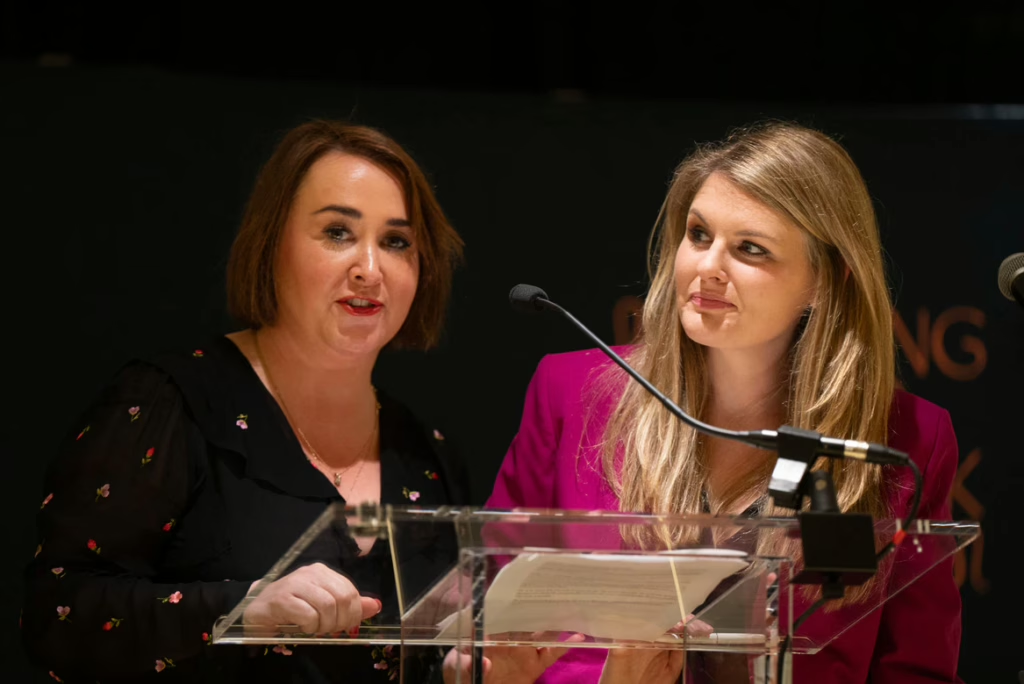
The article also quotes National Museum of Women in the Arts Director Susan Fisher Sterling:
When we have major societal disruptions and uncertainty, we see a flight to safety. That often means that leaders who arrived most recently – women leaders and leaders of color – end up under greater scrutiny and greater pressure to conform. And heaven forbit they are trying to change their institutions: they become a risk.
Pasternak’s and Sterling’s observations align with my own observations of museums and their leaders (and Sterling’s recognition of similar challenges faced by leaders of color deserves its own panel discussion, conference, and email). While it’s hard to talk about individual situations and we can never know what really happens between a leader and their board (or even within the board itself), I have seen boards tolerate behavior from male leaders that I don’t think they would tolerate from women leaders, and I have seen boards part ways with women directors in ways I don’t think they would have parted ways with men.
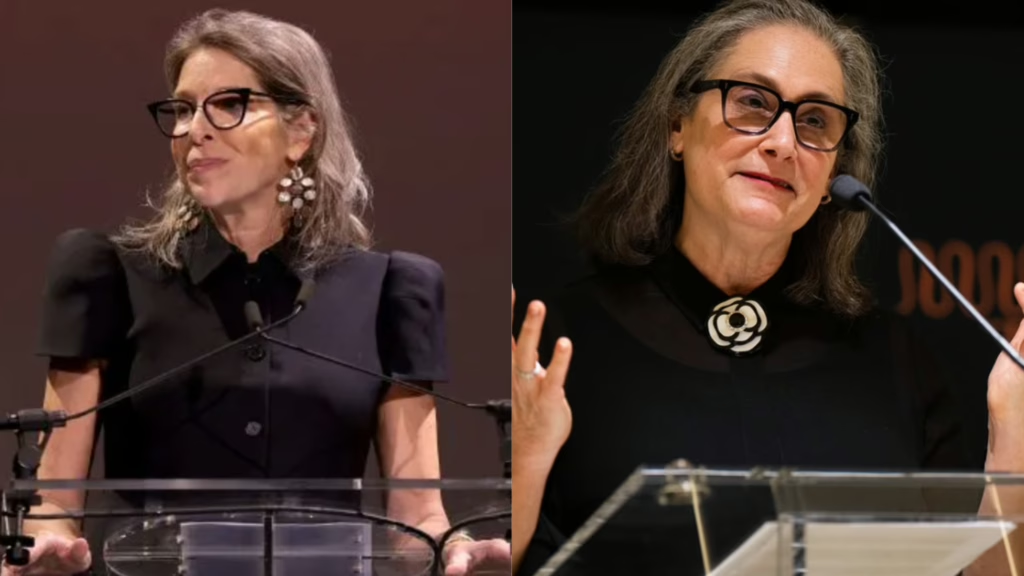
Right: National Museum of Women in the Arts Director Susan Fisher Sterling. Photo: Stephen Voss / CKA
For me, the next step in the conversation that Anne Pasternak kicked off is not about museum directors. It’s about boards. Supporting and managing museum directors is the role of governance, and any governance problems require governance solutions.
What might those look like?
First of all, boards who find themselves at odds with women leaders should interrogate themselves on whether they would be managing men differently in the same situation. And if they are reviewing problematic behavior by any leader, they should ensure they don’t apply a different standard to women than they have applied to men.
As all employers know, hard cases take the most work, and boards are at their best when they treat hard cases as collective work. Trustees who may feel that board leaders and executive committees are treating women unfairly should also be able to ask for help (including from their own governance committees).
I do not mean that museum boards should not remove directors. Museums face more challenges than ever, and if a board genuinely believes that a leader cannot (even with support) lead the institution to success, the board should act, and not wait longer than necessary. Museums simply cannot afford much time under a leader of any sex who is making things worse. But boards should try to make such a decision in a way that (1) applies to women on the same terms as to men and (2) strengthens, rather than weakens, the board itself. When a board chair or its executive committee manage these decisions in isolation, other board members can feel disrespected and disengaged. Which is not a good way to go into a transition or find the best way to support their next leader.
Museums need new leaders with new ideas more than ever. Based on recent trends1, a majority of them are going to be women. Whether those leaders get the chance to succeed depends, in large part, on the boards behind them.
- Thanks to the Mellon Foundation for funding this important ongoing study, which partners with Ithaka S+R, AAM and AAMD.