



5 WAYS
THAT AI CAN
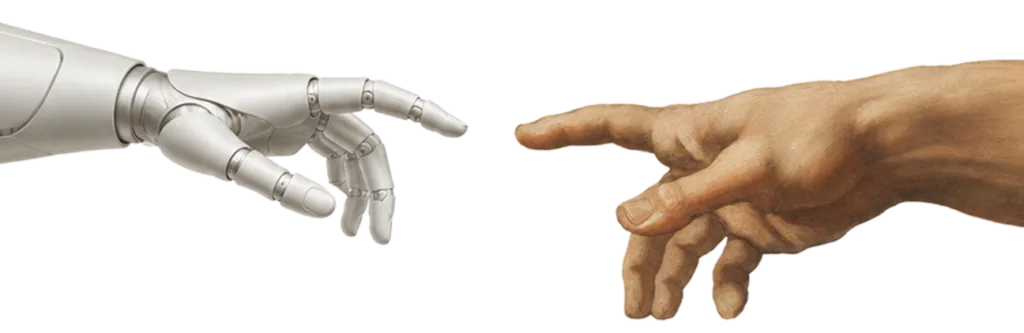
HUMANIZE
MUSEUMS
01
introduction
In museums and the art world, the topic of artificial intelligence is often met with resistance. There are reasons for museums and museum-workers to proceed slowly and carefully with AI — including questions around the protection of intellectual property and data, together with important ethical and environmental questions about its use. But these questions do not easily support a case to avoid AI entirely.
Such avoidance would, as a preliminary matter, be impossible. Museums and museum workers are already using AI, whether through existing search engines like Google or through Microsoft’s ubiquitous enterprise software (like Outlook) and its Copilot AI platform. As we will see below, this unavoidable use is one reason that museums seeking to protect confidential data actually need to train and focus their staff members on the use of AI, as a practice of risk-avoidance. In addition to museum workers, of course, the public and artists are already using AI, which means that AI is already affecting any museum’s digital strategy, ability to attract visitors, understanding of the ever-changing art world, and capacity to fulfill its mission. Avoidance is not an option.
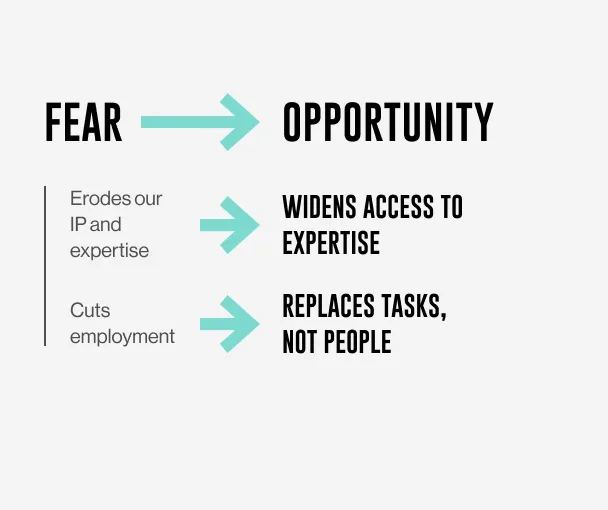
Like many knowledge workers, museum workers are appropriately wary of AI’s impact on a museum’s research and intellectual property, which has been built on their training, expertise, and hard work. There are also concerns that AI will be used to eliminate positions among museum workers. But there are examples — including some of those shared in this report — to counter both concerns. For one, AI can expand access to the expertise of museum workers, potentially expanding any museum’s reach and sustainability. And while AI may reallocate employment in museums, it is not at all clear that it will reduce any museum’s overall dependence on people, even on people who use AI to perform their jobs. The best way to preserve and increase museum employment is to make museums matter to more people, and no enterprise can succeed — and especially not ones facing the same threats as museums — if they are expected to maintain every existing employee in the same position, forever.
This paper will not resolve any specific questions about AI, and it is not a substitute for the policies that museums are wisely drafting and sharing about its responsible use. But in a world in which most content about AI and museums has focused on its risks, these case studies serve to illustrate some of AI’s benefits, and particularly the benefits that serve museum missions of engaging people with art, while also making museums more sustainable.
Its inspiration came from a comment made by Jim Breyer, a venture capitalist, AI investor, and trustee of the Metropolitan Museum of Art and the San Francisco Museum of Modern Art, at a Remuseum convening in early 2025. After several hours of thoughtful conversation about museum collections, Jim spoke up: “This group has said a lot of smart things over the last couple of hours, but no one has used the phrase that is in the first sentence of every other meeting I have.” That phrase was “artificial intelligence,” and Jim’s comment inspired another Remuseum convening, in January 2026. Together with Remuseum’s benefactor and our hosts, David Booth and Heather Pesanti, I gathered leaders and trustees from seven individual museums (along with two tech companies and one multi-museum consultancy) to share examples of their work in using AI and digital technology to enhance their missions and success*. What follows is a grouping of many (but hardly all) of those examples, shared to promote the idea that, rather than depersonalizing museums, AI may humanize them, giving more people more reasons to love art, and enhancing both staff and donor connections to their institutions.
02
Bringing Art & Technology to Life With Artists Residencies & Commissions
While AI poses a threat to the intellectual property rights of some artists, other artists are embracing it as a new form of creative expression. And some organizations are supporting residencies for artists using AI because it accelerates institutional understanding of digital art, a medium of great interest and appeal to the public.

Google Arts & Culture (GAC) has supported and collaborated with museums, archives, and libraries for over 15 years. GAC also supports creatives in residence embedded within institutions, providing access to Google tools, technical mentorship from Google engineers, and financial support in collaboration with the hosting partner. Recent examples include a technologist in residence at the Metropolitan Museum of Art, who used AI to build and test prototypes on topics such as museum way finding and artwork close looking (announced June 2026), and multiple artists in residence at Refik Anadol’s Dataland museum (announced July 2026).
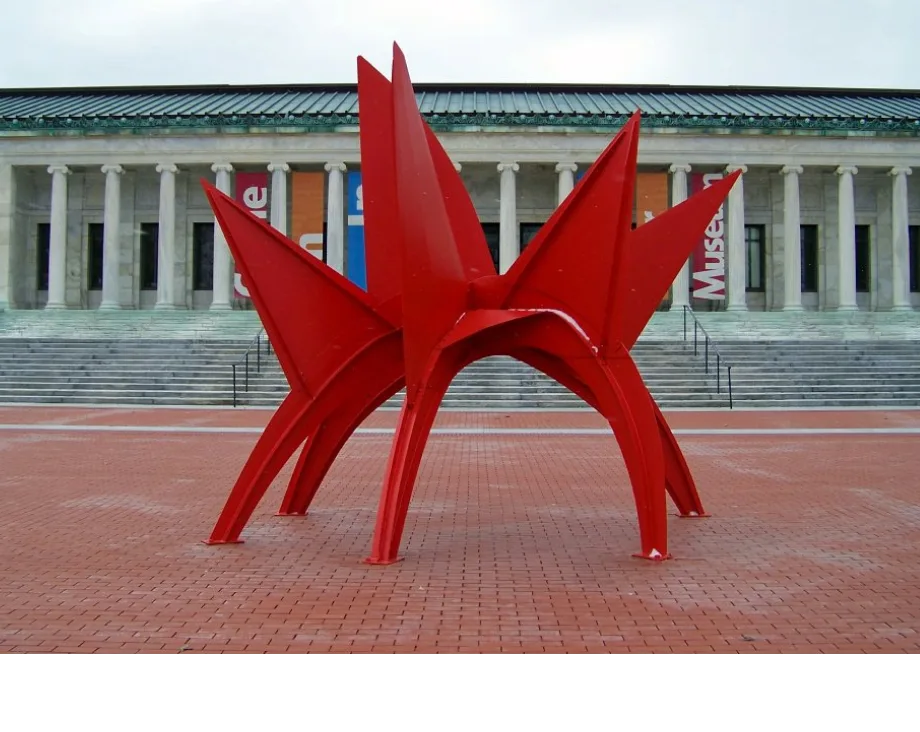

The Toledo Museum of Art launched a Digital Artist in Residence program in 2023. The program “offers artists from around the world a platform to hone their craft and focus on creation with the resources of the TMA at their disposal” and its stated goal is “to encourage conversation on how the twenty-first-century art museum can support digital artwork and expand its community.” Among other results, the program has allowed both the museum and the public to see that digital art is made by people and not machines. Because artificial intelligence can seem so abstract (or even inhumane), the TMA’s program promotes a more nuanced view of AI as something that artists (people themselves) are using, in a program that supports them and their careers.
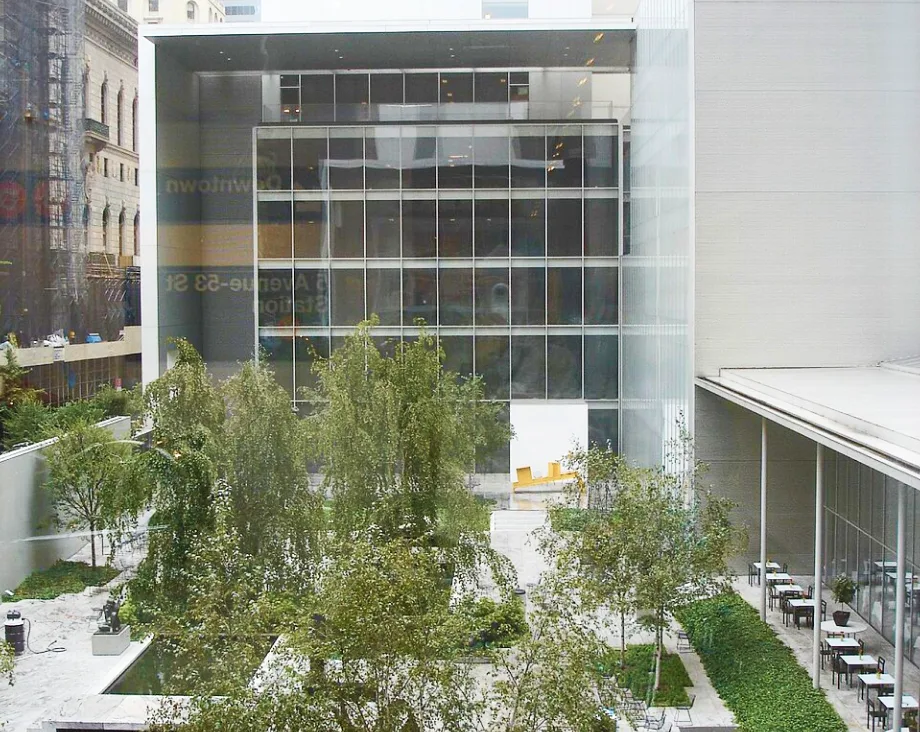

The Museum of Modern Art has brought digital artists into the museum in two ways. The Hyundai Card Digital Wall in MoMA’s lobby has presented digital art since it launched with Refik Anadol’s “Unsupervised” (a work trained on publicly available data on MoMA’s permanent collection) in 2022. The most recent artist presented was Sasha Stiles, who describes her work — exploring how human and machine minds process language, remaking itself every 60 minutes — as a “poem in residence.”
MoMA also partnered with Feral File (a cultural/technology company that champions computational art) on commissions, online exhibitions, and editions of digital art that can be sold to benefit both the artist and the museum. Results of this partnership included Anadol’s “Unsupervised” as well as an exhibition called “SOUND MACHINES” in which seven artists (including Yoko Ono and Holly Herndon and Mat Dryhurst) explore sound through new technologies, and the “MoMA Postcard” project, an experiment in collective creativity on
the blockchain.
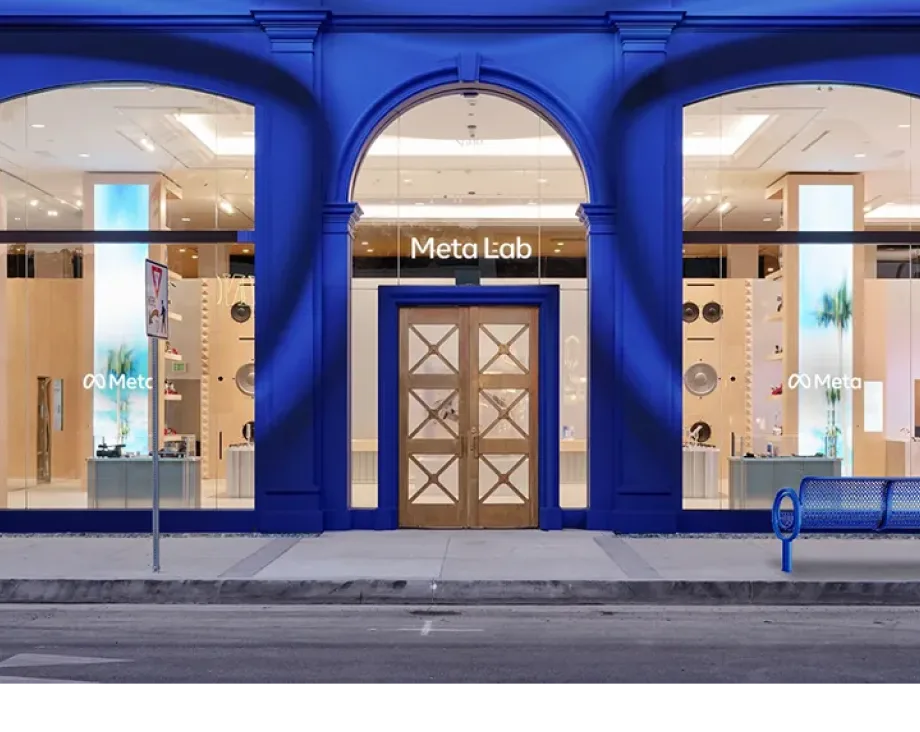

Meta Reality Labs has engaged artists in short-term and long-term residencies around both AI and XR. Artists like Alexander Reben and Susan Robb have been supported in residencies at Meta’s long-term research lab, to provide feedback and new ways of thinking to technologists while gaining access to new ways to produce their work. Meta has also supported production and museum exhibitions of the artists’ work.
AI and digital artist residences and commissions serve many museum goals. They support artists at the cutting edge of new concepts and media; they expand the work of museum curators, educators, and others; and they fulfill museum missions of serving the public with art, illustrating that art is always made by artists who, like the public, are working with and trying to understand new technologies and platforms. As museums know, artists can always show new ways of thinking and new ways forward, skills that are especially useful at times of uncertainty and division about technology and its role in culture and society.
AI and digital artist residences and commissions serve many museum goals. They support artists at the cutting edge of new concepts and media; they expand the work of museum curators, educators, and others; and they fulfill museum missions of serving the public with art, illustrating that art is always made by artists who, like the public, are working with and trying to understand new technologies and platforms. As museums know, artists can always show new ways of thinking and new ways forward, skills that are especially useful at times of uncertainty and division about technology and its role in culture and society.
03
Strengthening Museum Connections with Supporters

Museums depend on relationships — with the donors, members, and visitors who fund their missions — yet the data that captures those relationships is usually scattered across a number of systems and platforms that were never designed to talk to one another. A development officer trying to understand a single supporter might have to move from a fundraising database to a collections database to a ticketing system to an email platform, assembling by hand a picture that ought to be available at a glance. At the Detroit Institute of Arts, Chief Digital Officer Jen Snyder is using AI not to replace the people who steward those relationships but to give them a more accessible and complete view of the relationships themselves, allowing them to build more and stronger levels of donor support.
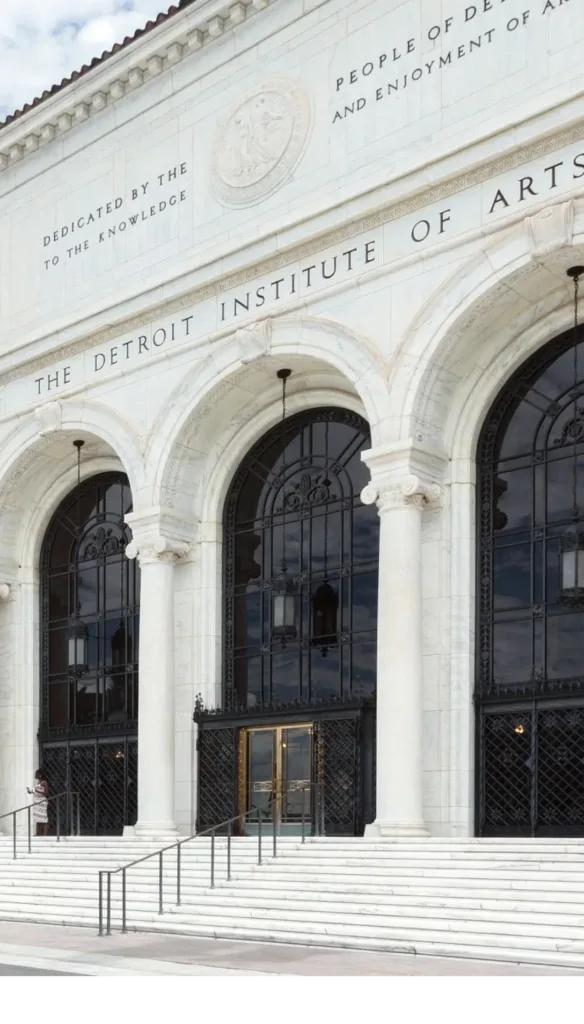
The DIA occupies an unusual and instructive position in the field. Since a tri-county property-tax millage first passed in 2012, public support has covered the majority of the museum’s overhead and allowed it to offer free admission to residents of the counties that fund it — a business model the museum has discussed publicly, including in a 2024 Wall Street Journal feature, and one that other institutions may find worth studying. Snyder came to Detroit from digital leadership roles at SFMOMA and the Art Institute of Chicago.
Invited to speak to a national gathering of museum development directors, Snyder listened to their frustrations. Fundraising is hard, and the databases meant to help are a patchwork of aging systems that, as one attendee put it, look like MS-DOS from 1999. To understand just one donor’s relationship to its museum, a development officer might have to check a fundraising system for gift history, a collections database for donated works, a ticketing system for visit history, and yet another platform to see which emails a patron had opened — cobbling together the full portrait of a donor almost entirely by hand. The instinct in the room was to solve the problem by building a single new database to hold everything, a multimillion-dollar undertaking. Snyder’s counsel, drawn from years of watching museums build costly custom systems that do nothing well, was to resist it and find a better way to work with the existing system.
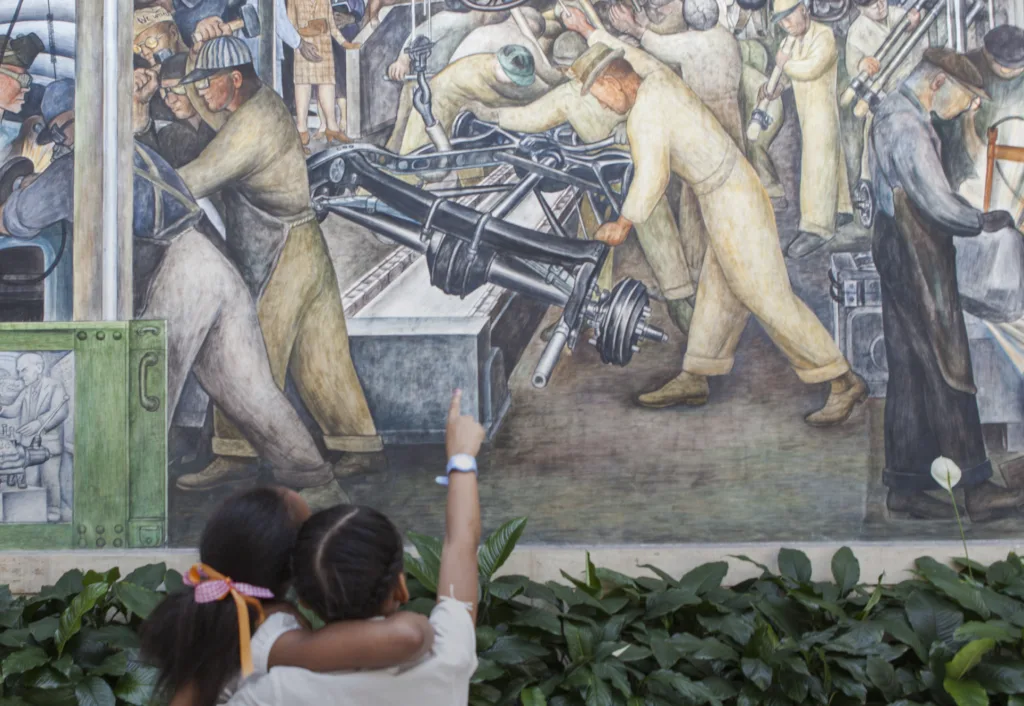
Instead of replacing the databases, she proposed connecting them: pointing a large language model at the museum’s existing systems and giving staff a simple chat window — built into the tools they already use — through which to ask plain-language questions and receive answers that draw on all of those systems at once. Rather than training each new employee on a series of outdated and siloed databases, the museum could simply let them ask an institutional “brain” sitting over all of those siloes for whatever they need to know. Snyder describes the goal in terms she borrows, fittingly, from an earlier technological era: to dam up the museum’s scattered material into a single data lake, run AI across it, and hand the results to staff. The immediate payoff is time — reports that once took weeks could become nearly instant — creating a foundation of information that the museum can layer with other capabilities, such as connecting the data to business-intelligence tools that continuously track where its tri-county visitors are coming from.
The same architecture can also serve the public and its varied and personal relationship to the museum and its collection. To make the case to her board, Snyder paired the internal tool with a more visible, external-facing one: an AI-powered collection search that lets anyone ask for works in ordinary language — any adjective, any description — succeeding where an earlier “mad-lib” dropdown search had grown too complex to code. A third ambition, which she calls a “curator in your pocket,” would let a visitor photograph a work and receive rich, connected content about it — but it, too, depends on first linking the museum’s underlying systems.
None of this is especially glamorous, and the museum frames AI plainly in its own presentations — less a form of intelligence than something operational, experimental, and translational: a way to connect and translate what the museum already knows, rather than a magic new capability. The estimated cost of the whole effort is roughly half a million dollars, a fraction of the multimillion-dollar database rebuild it makes unnecessary. And Snyder intends to open-source the work, as she has throughout her career, so that other museums can adopt or build on it; several have already offered to contribute. In this, the DIA models stewardship in two directions at once — better stewardship of the relationships that sustain a single museum, and a generous stewardship of the sector, building tools that can serve both itself and the field.
04
Personalizing the Museum by Speaking with One Voice

A museum’s voice — the tone of its wall labels, newsletters, fundraising appeals, and social media — is one of its most valuable and least examined assets. It is also, at most institutions, highly inconsistent: written by people who work in sometimes-siloed departments, of varied skill, and rarely governed by a consistent voice. The Frye Art Museum in Seattle has used AI to overcome some of those challenges, developing a well-defined, personal voice, then encoding a house style to let AI help it sound consistently like itself across many points of contact — and, in the process, making the public feel a stronger personal connection to the museum itself.
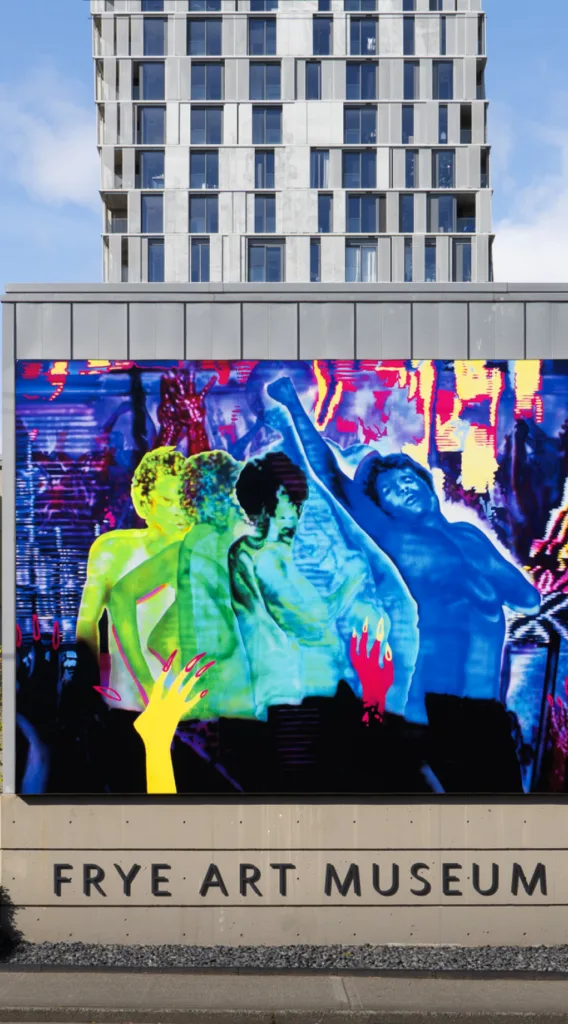
Image: A Body for Me:, Jacolby Satterwhite and the beautiful violence of survival
The Frye Art Museum is, in Executive Director Jamilee Lacy’s affectionate description, a “weirdo” museum: free to all, relatively small, and proud of a collection and program that are both highly specific to itself. Working with the consultancy Capacity Interactive, the museum developed a brand, positioning, and tone guide, then used it to train its in-house assistants like Copilot and ChatGPT to generate clearer, more accessible copy at every level of the institution. The tone it settled on is “cheeky elegance” — the elegance preserving a certain professorial authority, tempered by a cheekiness that makes it both accessible and full of character — a register that also acknowledges that artists themselves are often ironic, sardonic, and spicy.
The results have been striking for an intervention that cost only $7,500. Web traffic from repeat visitors is up 20 percent since the museum began pairing the model with its new positioning guide; attendance has risen 18 percent even as several other Seattle museums have seen declines of 15 to 20 percent; and membership has grown. In a city Lacy notes is among the most highly educated in the country, visitor-engagement surveys report audiences newly excited by the content coming from the museum’s website, its social media, and its program texts. Lacy is careful about the causal claim, but its other work is mostly unchanged, and she believes that a consistent, confident voice has made the museum’s distinctiveness legible to people who admired it but had not felt invited in. The guide, as she puts it, has let the Frye retain its weirdness through the content while smoothing the way that weirdness is communicated.
Crucially, the voice was defined by people and is applied everywhere. The museum built its style the way one builds an editorial or brand guide — through workshops with staff, longtime collaborators, board members, and others with deep institutional knowledge — and only then trained the model on it. The guide now shapes non-curatorial texts, from fundraising letters to newsletters, and curators can use it to check tone for wall labels they write. It reaches inward as well: the Frye used it to help rewrite its employee handbook and to tune the AI assistant inside its HR portal, so that staff are addressed in the same voice as the public. A communications director with a masters in modern art oversees the guide and keeps it evolving.
This use of a distinctive voice connects the Frye’s experience to a wider truth about the field. Museums can suffer from a kind of institutional isomorphism — insisting they are different while steadily coming to look alike — and audiences, like people, do not form strong attachments to institutions that try to be everything to everyone. We build relationships with things that feel like something, the way we love a friend even for the same bad joke told again. A distinctive voice means a museum will not be for everyone; it also means it will be, more deeply, for many. Used this way, AI does not flatten a museum into corporate sameness. It helps a museum sound, consistently and at scale, like itself.
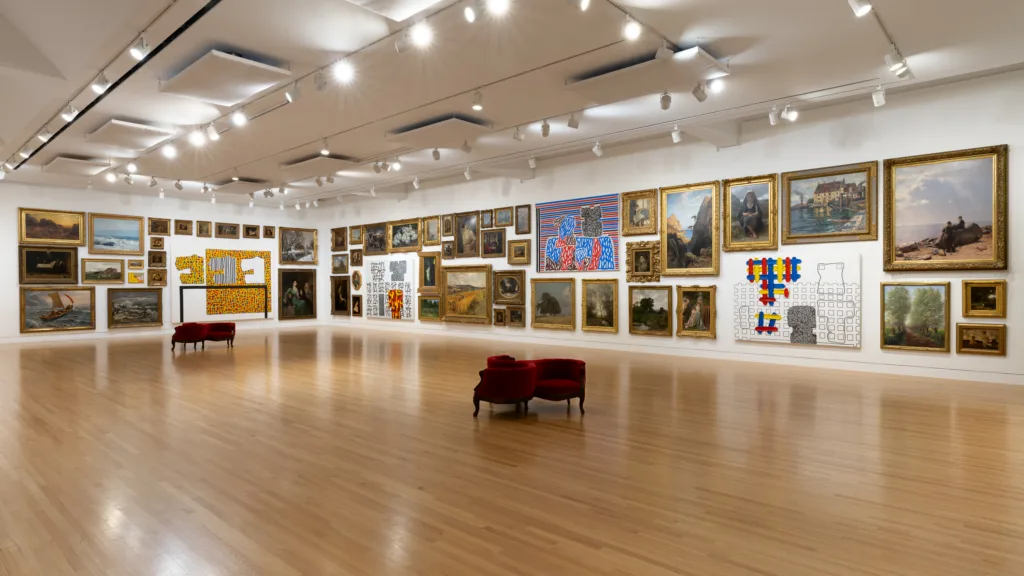
Frye Salon, Frye Art Museum, Seattle, March 28, 2024–January 5, 2025. Photo: Jueqian Fang
05
Investing in Staff Development for AI
One of the most common fears about AI in museums is that it will be used to replace people. Two institutions are doing something closer to the opposite: investing in their staff — through access, permission, training, and governance — so that employees can use AI both well and safely. As the introduction to this report noted, focusing staff on approved tools is itself one of the surest ways to protect a museum’s confidential data. These museums treat AI fluency less as a threat to jobs than as a form of professional development.
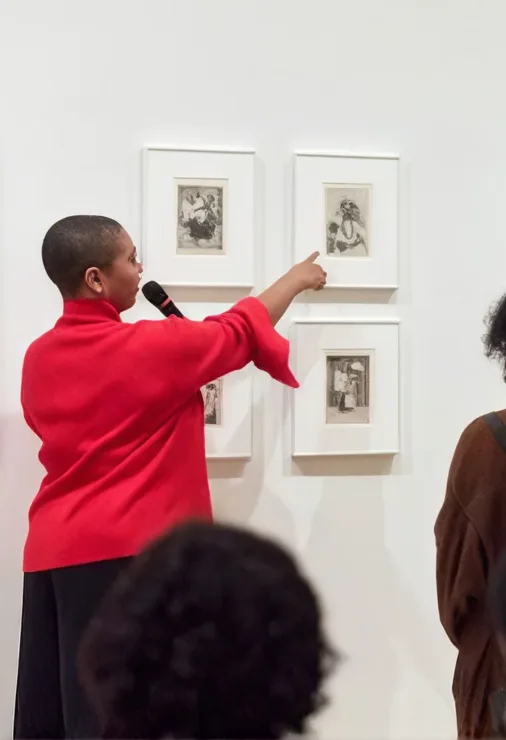

The Museum of Modern Art approaches AI with a “Human + AI” approach, using its corporate partnerships to invest in its people first, through training on platforms that protect institutional data and generate lessons that can support the museum’s mission and be applied across departments.
Through MoMA’s work with Google it provided Gemini Pro to every member of its staff, with the explicit intention of creating permission — an encouragement to use the tool in everyday work rather than building a long list of prohibited activities. That permissive culture is deliberately paired with a simple framework for managing risk. Chief Operating Officer Jan Postma described the logic: for ordinary day-to-day tasks, staff may use whatever tool they like; for anything involving MoMA’s own information, they are directed to Gemini, where the museum holds a confidentiality agreement with Google; and for anything public-facing, ideas run through a monthly AI governance group where staff can bring proposals and questions. The point, Postma stressed, is not to eliminate risk but to understand it — the same posture the museum takes toward uncertainty generally. At the board level, AI now sits within MoMA’s existing enterprise risk-management system and the audit committee’s purview, so that the conversation about risk is continuous rather than reactive.
MoMA has added additional tools through a partnership with Anthropic and now also licenses Claude for a large group of employees to use. Both Google and Anthropic bring teams onsite for training and listening to MoMA staff. The museum has seen great gains in productivity and effectiveness in functions like coding and across departments like finance, operations, maintenance, legal, data, and accounting. The result, in work that is very much ongoing, is that MoMA staff members have seen that AI doesn’t replace people; it replaces tasks, allowing them to focus on higher-value, mission-based work.
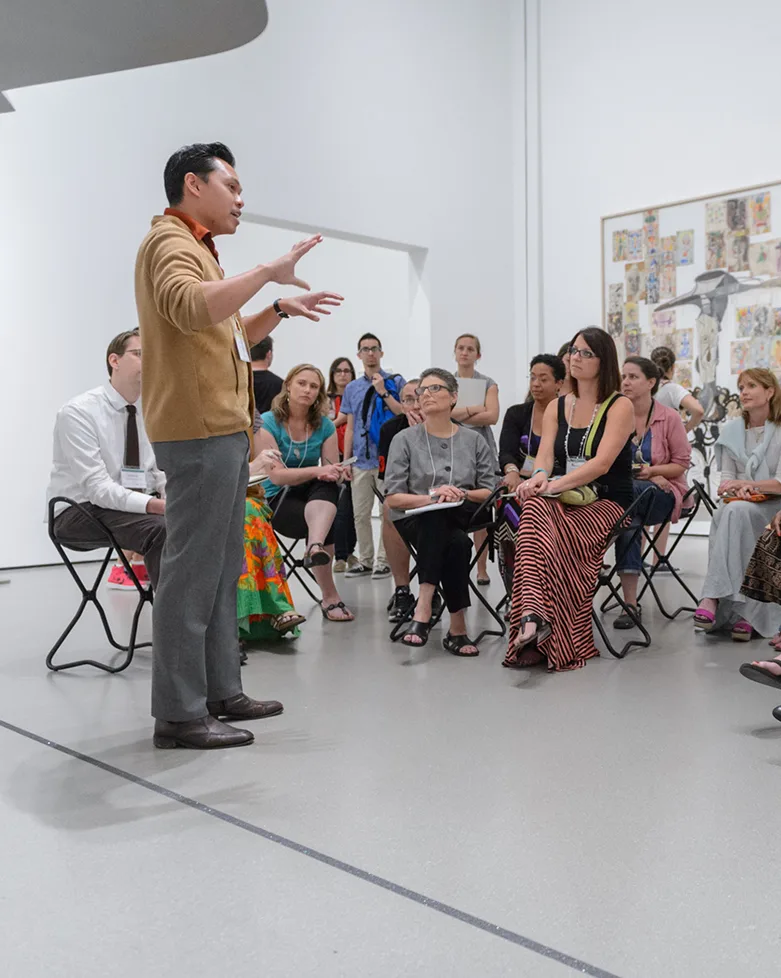

The National Gallery of Art has made staff training the centerpiece of its approach. An enterprise partner of OpenAI that also works across Copilot and ChatGPT, the National Gallery (which couldn’t attend the gathering but shared its work beforehand) is entering an upskilling phase for its staff, built around a training series and a five-part introductory course. Among the things it aims to teach is what the museum calls digital judgment: not simply how to use AI, but how to use it intelligently and well.
The National Gallery is equally deliberate about resistance. Rather than mandate adoption, it plans multiple open staff conversations and actively encourages what it describes as healthy skepticism, on the view that every consequential decision a museum makes carries moral, environmental, and ethical dimensions — and that AI is no exception, and should be discussed in those terms along the way.
Taken together, MoMA’s permissive-but-governed culture and the National Gallery’s investment in upskilling point to the same conclusion: the museums least likely to be harmed by AI may be those that invest the most in helping their people understand it collectively and use it thoughtfully.
06
Personalizing Art Experiences for Every Visitor
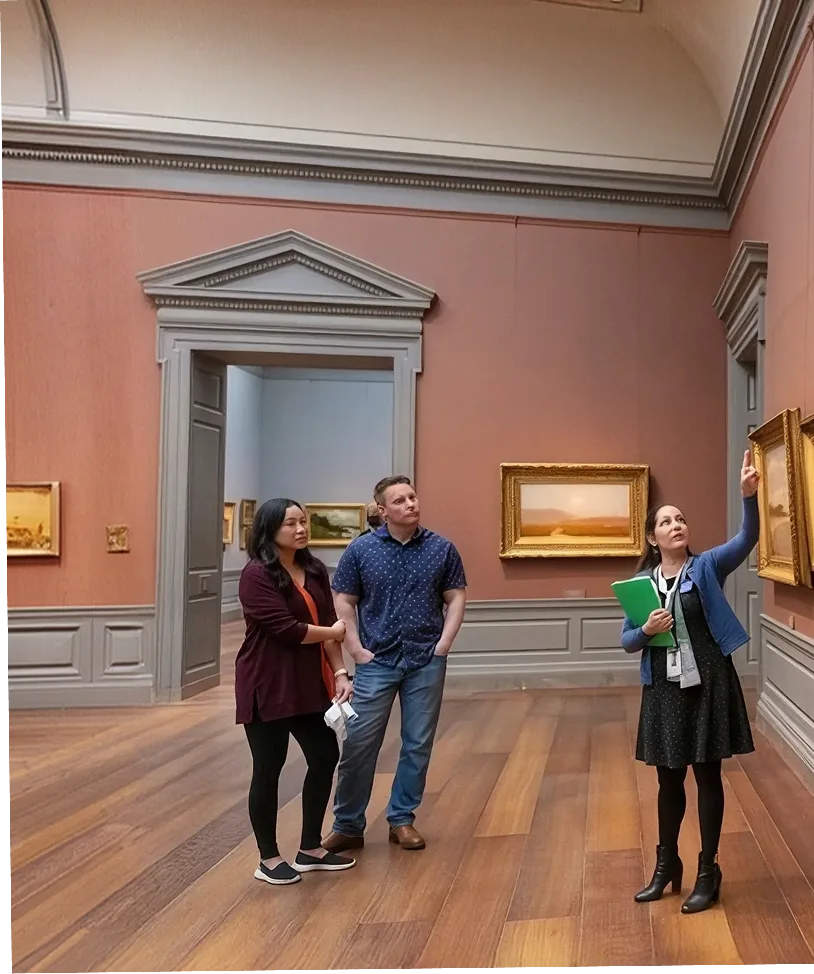
Nowhere is the fear that AI will de-personalize the museum more acute than in the galleries themselves, where a personal encounter between a work of art and a human is the whole point. Yet several museums at the convening are using AI to do the opposite of what that fear predicts: to help each visitor look more closely, find their own way in, and carry that encounter beyond the walls of the building. Their work shares a conviction that personalization, done well, is not a screen between the visitor and the art but a way of meeting each person where they are.
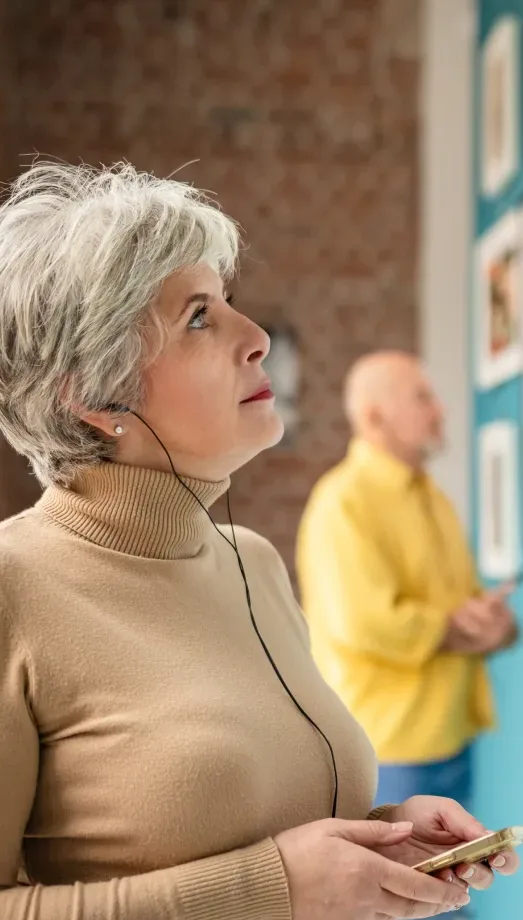

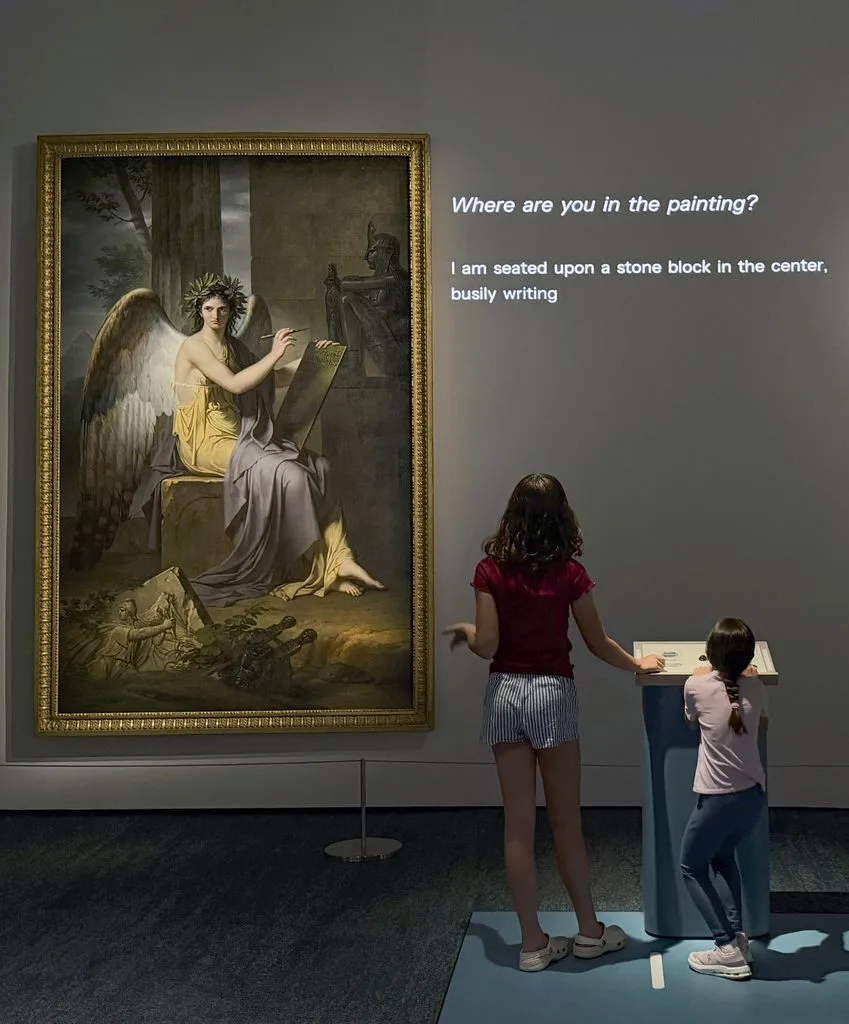
Few museums have pursued that idea longer, or more systematically, than the Cleveland Museum of Art, where Chief Digital Information Officer Jane Alexander has spent more than fifteen years building the digital infrastructure that makes it possible. The museum’s guiding principle, rooted in a 1916 mission to create transformative experiences “for the benefit of all the people forever,” is that technology is never deployed for its own sake but as a tool to bring people closer to the art — to meet visitors, as Alexander puts it, where they are. Its timeline of digital initiatives traces that conviction across almost 15 years:

2012
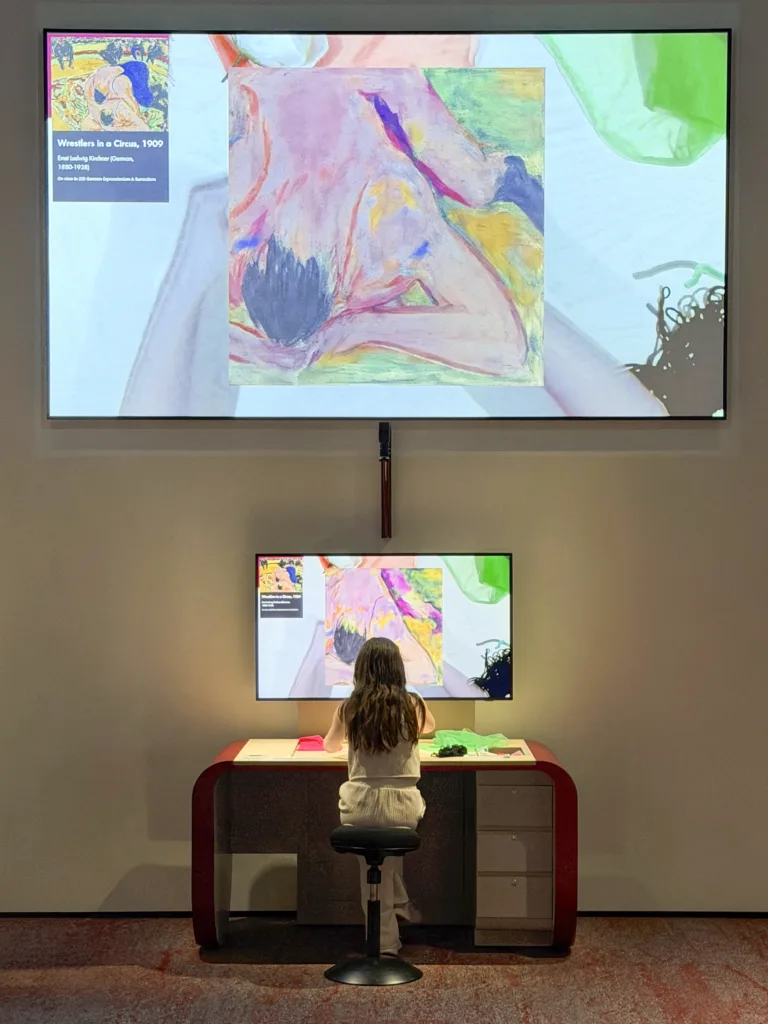
Gallery One opened with a 40-foot Collection Wall, one of the world’s largest interactive touchscreen displays, featuring more than 4,100 artworks. It also included two early uses of AI. Make a Face matched a visitor’s face with faces in the collection.
2013
The ArtLens App launched, creating a personalized connection between visitors, collection data, and the art on view.
2016
ArtLens Studio explored creative play through computer vision, responsive technology, and interactive design.
2017
ArtLens Exhibition used gestures, eye tracking, and AI to make “Art 101” playful. Express Yourself read visitors’ facial expressions as they looked at an artwork.
2019
Open Access made public-domain images and collection data free to download, share, and reuse, creating a trusted foundation for future AI projects.
2020
During the pandemic, CMA created online experiences including Share Your View and ArtLens for Slack, using AI to connect audiences with the collection from home.
2021-22
Revealing Krishna combined scholarship with four immersive experiences. Its mixed-reality tour used computer vision and spatial mapping to explore the history and conservation of a monumental Cambodian sculpture.
2024
CMA launched a new accessible website and Collection Online experience. Every artwork detail page uses AI powered visual similarity to suggest related works. CMA also opened: Into the Seven Jeweled Mountain, an immersive experience that brought a historic Korean landscape to life.
2025
Pintoricchio Magnified used AI-powered camera tracking to follow visitors’ movements, allowing them to walk through the painting’s conservation layers and explore newly revealed details.
2026
ArtLens Reimagined opened with 21 experiences designed to inspire curiosity, creativity, and closer looking. Seven thoughtfully integrate AI: Talk to the Art, Art Morph, Strike a Pose, Hand Model, Community Mural, Infinite Landscape, and You on View. The new ArtLens App also uses AI to identify every artwork on view and provide immediate access to trusted CMA information. Throughout ArtLens, AI supports rather than replaces human creativity and scholarship, while respecting artists’ rights and protecting visitor privacy.
Although CMA has used AI since 2012, the technology has never been the goal. Like photogrammetry, mixed reality, immersive storytelling, and interactive design, AI is one of many tools the museum uses to support art, learning, accessibility, and audience engagement. Each project builds on lessons from earlier work. The online game Extend the Art, for example, teaches people to write effective AI prompts using artworks from CMA’s Open Access collection. The game took one month to build and another 11 months to test and refine with appropriate safeguards. CMA also publicly shares its principles, practices, and safeguards through its public vision statement: AI in Service of Art, Learning and Accessibility
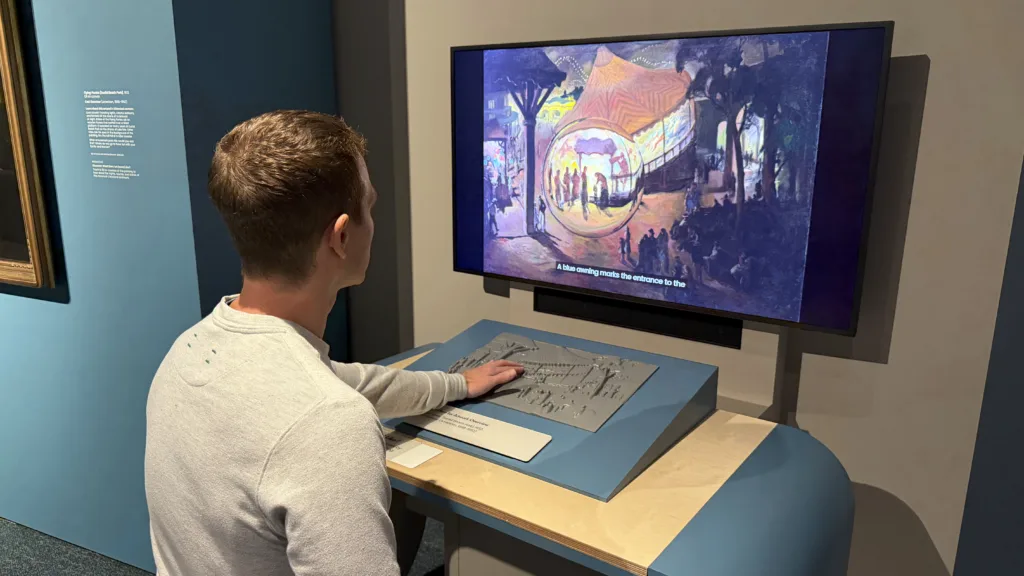
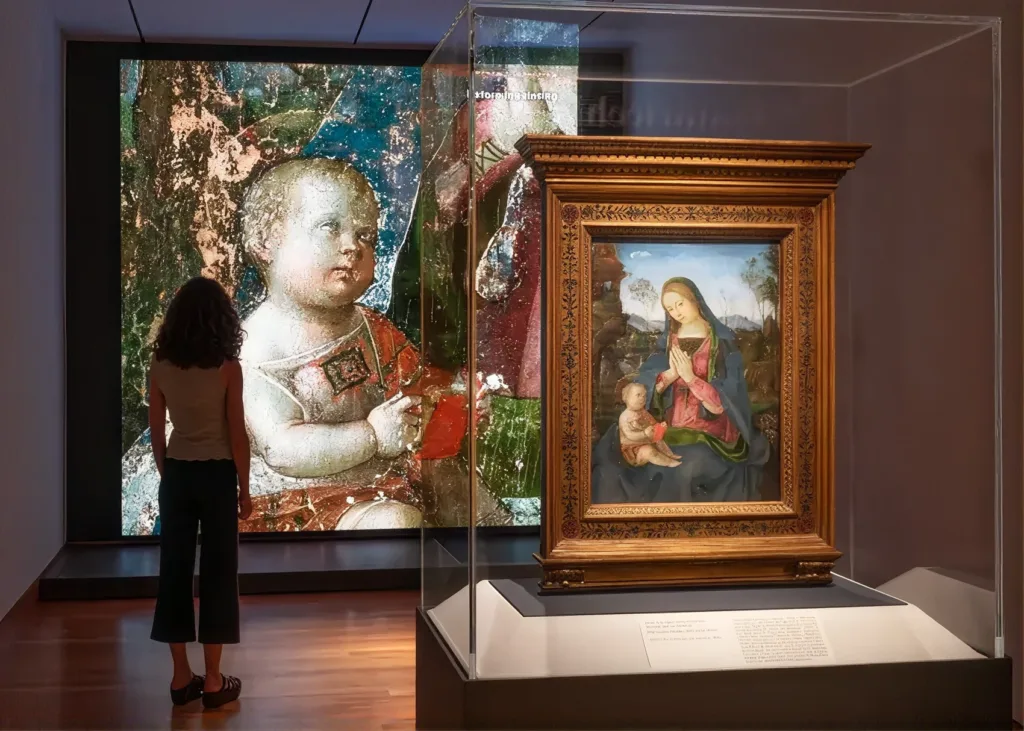
Across these projects, the museum’s analytics show that playful digital experiences encourage people to engage more deeply with the collection and look more closely at the original art.
Accessibility has become an especially important area for this work. After a 2023 workshop at the National Gallery of Art, CMA and the National Gallery formed a museum consortium to explore how AI could help create visual descriptions at scale. CMA administers the group, which meets monthly to share research, testing, and lessons learned. Working with the accessibility firm Prime Access Consulting, CMA developed a roughly 40-page guide, built prompts and tools from it, tested several AI models, and manually wrote approximately 1,500 descriptions as examples. With credits from Google, CMA used Gemini to help extend this work across the collection. In spring 2026, the museum launched visual descriptions for the primary images of more than 68,000 objects. Each AI-assisted description is clearly labeled and invites public feedback, continuing a practice that already generates approximately 50 messages a week about CMA’s collection data. The result is a collection that is more accessible and better documented, with technology expanding access while museum expertise, public trust, and the art remain at the center.
The National Gallery of Art offers a different angle on the same goal. Historically a text-light institution — a democratic place built to let the nation’s treasures speak for themselves, with little interpretive text — it finds itself with relatively little written material to draw on at exactly the moment when text has become newly important. Its response is to use AI to generate first drafts of interpretive text for roughly a thousand artworks, trained entirely on the museum’s own authoritative content drawn from its catalogs, its collections database, and other historical sources. These drafts are built from the National Gallery’s own scholarship — and are presented to curators as a starting point rather than a finished product, tuned for consistent tone and grade-level readability.
There are market-based reasons to develop AI-friendly interpretive tools as well. Like other fields, museums developed a series a tools to attract and engage online audiences, tools that were grounded in principles of search engine optimization (SEO). Like other museums (and businesses), the National Gallery started to see website traffic impacted by Google’s shift to AI-generated summaries in search results in mid-2025, giving it (and other museums) a new reason to make their content available in more places and ways, rather than relying SEO for people to find the museum via traditional search. Chief Information Officer Rob Stein has raised the harder questions that accompany this work: about synthetic media and fakery, about the responsible reuse of a museum’s own assets, and about whether the field’s long tradition of open access to collections data may come into tension with newer, more proprietary thinking. This report does not resolve those questions, but every institution will have to face them.
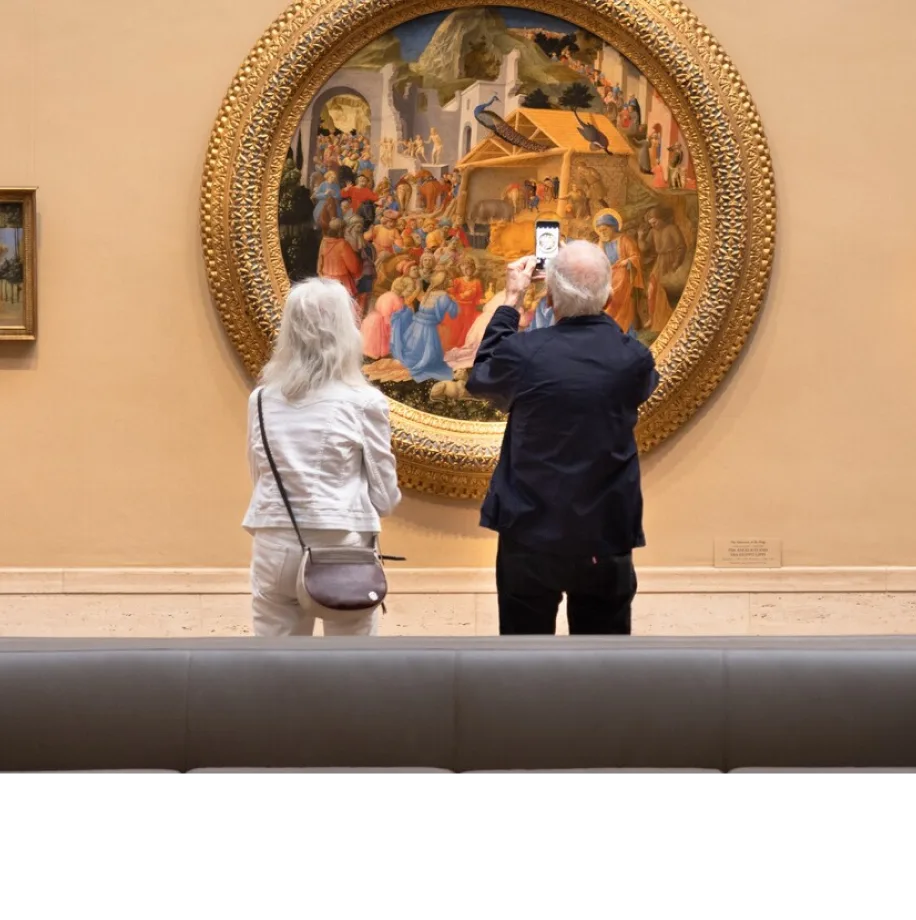

At Crystal Bridges Museum of American Art, the push toward personalization is unfolding in a community — the home of Walmart — where AI is, in Executive Director Rod Bigelow’s phrase, “in the water.” Bigelow frames the museum’s charge in terms of its founding purpose: Crystal Bridges is, above all, a storyteller. And with a recently expanded campus that increasingly joins art with health and wellness, the question is how to tell its stories more richly, and to more people, at an ever growing scale.
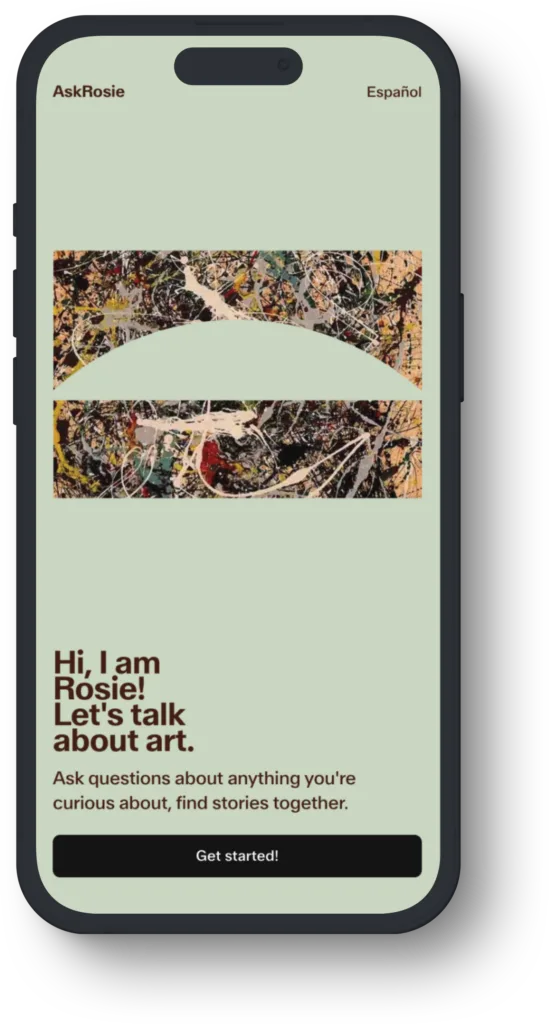
The museum’s answer is an AI Art Companion named Rosie (named for a museum hallmark, Norman Rockwell’s painting of “Rosie the Riveter”): a personalized, voice-enabled, mobile-first guide meant to meet each visitor where they are — emotionally, cognitively, and situationally. Built as a progressive web app rather than a native one — precisely to avoid the download friction that holds typical museum-app adoption to between 3 and 5 percent — it lets a visitor simply hold up a phone to a work (every piece on view has been indexed for image recognition) and begin a conversation, without requiring a QR code or number beforehand. It is voice-enabled by design, so that visitors can keep their eyes on the art while they talk and listen; the goal is to support close looking, not to put another screen between people and the work.
Under the hood, the companion is deliberately modest in its engineering: it does not invent new technology so much as bind existing models to Crystal Bridges’ own data, prompts, and preferences. Its pipeline draws on a foundational inventory of seven institutional sources — beginning with the museum’s collection metadata and a rich archive of curators speaking about the works on view, and expanding to extended labels, member-magazine content, and the museum’s interpretive frameworks. A collection of roughly 4,000 objects, well documented and current, makes the undertaking manageable. The project is a departure from the museum field’s habit of designing every offering for every audience: here, digital functions as a parallel system, with tools optimized for particular segments — early adopters and arts enthusiasts among them — as one part of a broader commitment to access, and to closing the gap between a guided and an unguided visit.

The Toledo Museum of Art is approaching personalization from the studs up — literally. As it undertakes its first reinstallation in some forty years, effectively building a new museum inside its historic buildings, Director & CEO Adam Levine has come to believe that the real analog to the great museum-building of the past is not another building but infrastructure. Toledo’s Beaux-Arts building was famously overbuilt in the 1930s, he notes, with roughly 60 percent of its gallery space left unfinished for a future that took almost ninety years to arrive — a decision that saved the museum more than one hundred million dollars in expansion costs over those decades. The lesson Levine draws from this history is that the moment to make a generational investment is now, while the museum is already down to the studs, and that meaningful personalization will not come from a front-end software solution alone.
Toledo is investing in the physical layer that AI-driven personalization requires: fiber, space for edge computing, and location-awareness technology. To coordinate the effort the museum created TMA Labs, an internal group that functions as an in-house consultancy, advised by figures from the technology world including Ian Charles Stewart, a co-founder of Wired magazine. The near-term aim is a frictionless reentry to the Museum for every visitor with the Museum’s 2027 reopening, helping every visitor, whether they have come for fifty years or never before, find their way through galleries no one will yet know.
That infrastructure is also a long-term data strategy. By knowing, precisely, that a visitor lingered four minutes in front of a Dubuffet and twelve seconds before a Calder, the museum expects to build an unusually rigorous dataset — and, from it, genuinely personalized, AI-driven experiences in the years that follow. Levine’s vision is expansive but human in its aims: a visitor should be able to move through the entire museum without ever taking out a phone, yet be able, whenever they wish — in the café, in the galleries, or at home afterward — to revisit and interact with content that reflects their own visit. The real prize is not the in-gallery screen, which too often echoes the failed second-screen experiments of television, but the relationship a museum can build with a visitor beyond its walls — and the community visitors might build with one another. In one illustrative possibility, Levine imagined inviting the twenty visitors who lingered longest before a particular Monet in a given month to a special conversation with a curator — not to sell them a tote bag, but to turn a moment of attention into a relationship, and perhaps, into deeper membership and support.
Conclusion
From Seattle to New York, from Detroit to Bentonville, and across every example in this report, a shared philosophy emerges. Personalization through AI, in these hands, is not a substitute for the encounter with art or a way to eliminate people from the institution, but a way of honoring those encounters and the institution that provides them: helping each visitor build stronger, deeper and more personal connections to art and to the museum itself, and helping museum workers feel more empowered to use their expertise in service of their work and their museum’s mission. It keeps curators, conservators, and artists in the loop rather than writing them out of it, and it treats the visitor not as a data point to be harvested but as a person to be met.
The examples gathered here do not resolve the hard questions about AI, about intellectual property, data, the environment, employment, and ethics. Museums are right to take those questions seriously and to address them through the careful policies this report is not meant to replace. But they also propose a different starting point than the one that dominates most conversations about AI and museums. In each case, an institution began not with the technology but with its mission — to steward the relationships that sustain it, to speak with a voice that is genuinely its own, to invest in its people, and to help every visitor find a way to the art — and then ask how AI might serve that mission more fully. Understood that way, AI is not about turning museums into machines, but about humanizing and effectively fulfilling museum missions of making art matter to people.

Acknowledgements
Paradox Cove is an appropriate name for a place to host a gathering on the complexities and opportunities of AI for museums and the public, and it is also the Austin home of David Booth and Heather Pesanti, who graciously hosted Remuseum and the following organizations that made time to gather there:
- Crystal Bridges Museum of American Art
- Museum of Modern Art
- Toledo Museum of Art
- Cleveland Museum of Art
- Detroit Institute of Arts
- San Francisco Museum of Modern Art
- Frye Art Museum
- Balboa Park Online Collaborative
- Google Arts & Culture
- Meta Labs
- While the National Gallery of Art was unable to participate in person, it shared experiences and case studies with the convening and in this report.
David Booth, a renowned entrepreneur, founded Dimensional Fund Advisors in 1981 and remains its Executive Chairman. A great benefactor of the two universities that shaped him (the University of Kansas and the University of Chicago), he is an art collector and patron who serves on the Board of the Museum of Modern Art and inspired and funded the development of Remuseum. Heather Pesanti is a curator with a distinguished record of creating exhibitions and publications at both the Albright-Knox Gallery (now the Buffalo AKG Art Museum) and The Contemporary Austin. She now serves as the Curator and a Vice President at Dimensional Fund Advisors, where she oversees a global art collection across 15 offices worldwide. She is a Trustee of the Chinati Foundation and serves on advisory committees at Crystal Bridges Museum of American Art, the Museum of Modern Art, the Guggenheim Museum, and the Harry Ransom Center at the University of Texas (Austin).
This work would not have happened without David Booth’s generosity and guidance. The success of this convening (like two others that preceded it) depended on his and Heather’s warm hospitality and encouragement of bold conversations about the arts, wherever they lead.
Footnotes
[*] After Remuseum’s January convening, the Devos Institute published a report in March 2026 with a similar perspective. “An AI Roadmap for Nonprofit Arts and Culture Organizations: Practical Insights and Use Case Studies From the Devos Institute A3 (Arts x Admin x AI) Initiative” offers an AI roadmap that is both realistic and opportunistic, grounded in applied research conducted in partnership with 16 U.S. arts organizations, including 12 key case studies.